In 1668, an "Italian Voyage" by Richard Lassels was published, and the institution of the Grand Tour of Europe was born.
The Grand Tourist was typically a young man with a thorough grounding in Greek and Latin literature as well as some leisure time, some financial means, and some interest in art. Most Grand Tourists would set out upon the long journey full of expectation and curiosity, having already heard of the cultural wonders awaiting them. They would be accompanied by a teacher or guardian, and expected to return home with souvenirs of their travels as well as an understanding of art and architecture formed by exposure to great masterpieces.
The sons of English aristocrats were sent to further their education aesthetically and culturally -to learn about the art and culture of Europe, to become a connoisseur, and learn refinement at the hands of the supposedly more refined aristocrats of Europe. They might also learn the languages and customs of other European countries and prepare themselves for employment as ambassadors, so to participate in England's newly acquired role in world history. These gentlemen were to become the scientists, authors, antiquaries, and patrons of the arts.
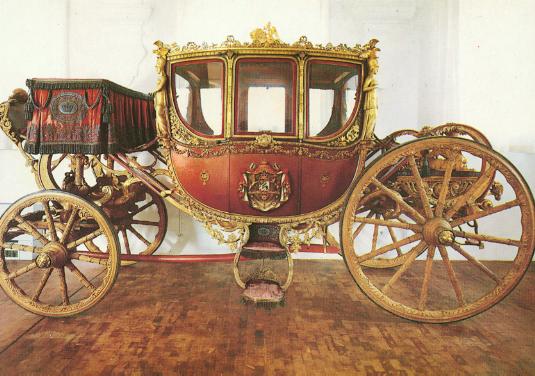
Seventeenth century tourism was, however, somewhat different than today's luxury coach trip on smooth highways. The roads were unpaved, rutted and muddy. The mountain passes were often little more than mule tracks, their precipitous edges plunging down into distant ravines below and causing severe distress to those foolhardy enough to peer out of the muddy carriage windows. Springs and even axels would break, necessitating long waits while the coachmen improvised or expertly repaired.
Hostelries were not five-star hotels either; one might be expected to bed down with a room full of others, either on straw mattresses on the floor, or sharing a large bed. And travelers needed to keep their wits about them if they were not to be “taken for a ride” by sharp and wily innkeepers, porters and coachmen, not to mention the occasional highwayman!
London was a frequent starting point for Grand Tourists, and Paris a compulsory destination; many traveled to the Netherlands, some to Switzerland and Germany, and a very few adventurers to Spain, Greece, or Turkey.
The essential place to visit, however, was Italy. The British traveler Charles Thompson speaks for many Grand Tourists when in 1744 he describes himself as "being impatiently desirous of viewing a country so famous in history, which once gave laws to the world; which is at present the greatest school of music and painting, contains the noblest productions of statuary and architecture, and abounds with cabinets of rarities, and collections of all kinds of antiquities."
In addition to the more intellectual approach of many Grand Tourists from England, music-making was highly prized by many of the princely and kingly courts of northern Europe, and leading musicians would often be financed for their journeys south to bring back the latest styles and compositions.
Within Italy, the great focus was Rome, whose ancient ruins and more recent achievements were shown to every Grand Tourist. Here too, it may be said that baroque music was born. During the first half of the 1700s, baroque music adopted the Italian forms of the concerto and sonata, and with them, much of the Italian baroque "vocabulary" together with the latest Italian compositions.
As they did the Grand Tour through Europe's main attractions, these are some of the musicians the Tourists were likely to, or might have been fortunate enough to meet in the different countries they visited.